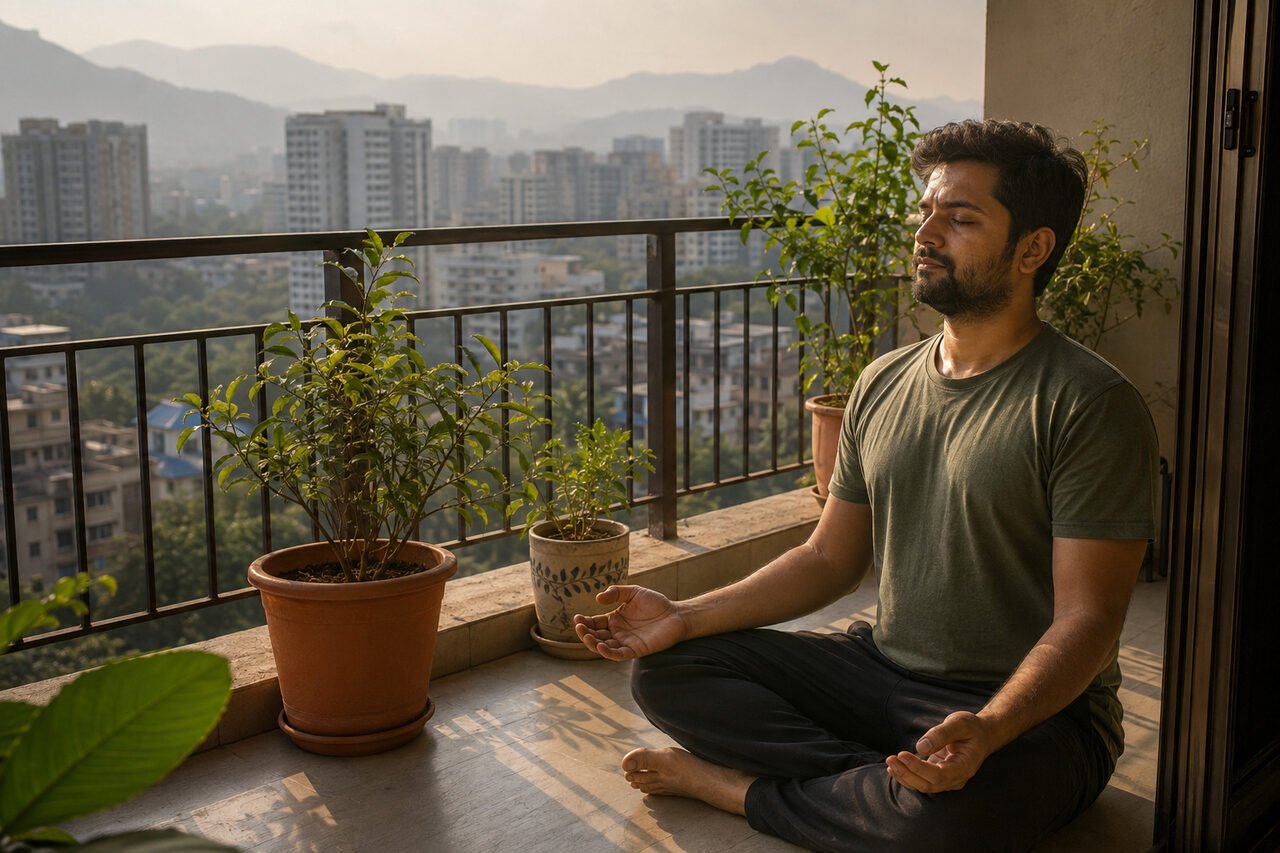
Think of the end of a long day in Thane. The laptop is finally shut. The traffic has been negotiated. Messages have been answered. You sit down for dinner, step onto the balcony, put on a favourite song or meet someone you care about.
Sometimes, almost without warning, the mind becomes quiet. For a few seconds you are not replaying the morning and you are not rehearsing tomorrow. You are simply there.
That small shift raises an interesting question: how much of what we call “enjoyment” is really our search for the present moment?
What are we buying when we buy an experience?
Most of us spend money first on necessities: food, shelter, education, travel and the practical things that keep life moving. But once those needs are met, a large part of discretionary spending is about experience.
We pay for a restaurant not merely because calories are unavailable at home. We pay for ambience, taste, company and the moment in which all of them come together. We buy a movie ticket because for two hours a story can hold our attention so completely that the unfinished grocery list briefly disappears. We travel because a new landscape can make us look up, notice and feel alive.
Maybe the “wow” we seek in an experience is the moment when the mind stops travelling through time.
This does not make experiences shallow. Quite the opposite. It helps explain why they matter so much. They interrupt the mental stream and give us a glimpse of presence.
The interesting contradiction
We often work very hard in the hope of earning enough to create those moments: a better holiday, a nicer dinner, a quieter home, a more comfortable weekend. Yet the thing we are ultimately trying to experience — presence — is not actually a luxury product.
A child absorbed in play can have it. Someone watching rain from a window can have it. A musician can have it in the middle of a song. A meditator can discover it sitting with closed eyes.
The external trigger may be different, but the inner quality has something in common: attention is no longer scattered between what happened and what may happen.
What meditation changes
Meditation does not ask us to stop enjoying good food, travel, music or everything else that makes life colourful. It simply introduces another possibility: can the mind learn to arrive in the present without always needing an extraordinary external event to bring it there?
That question is especially relevant in a city like Thane, where the outer environment may remain busy. The purpose is not to make the city silent. It is to discover whether silence can become more accessible within us.
Perhaps that is why a regular meditation or breath practice can feel so valuable. It gives us a repeatable way to notice the mind, settle the noise and experience a little more of the life that is already happening.
Experience, not just ideas
What if a calmer mind became a practice?
Learn Sudarshan Kriya® and practical tools for everyday life in the Art of Living Happiness Program in Thane.
See the next Happiness Program →